
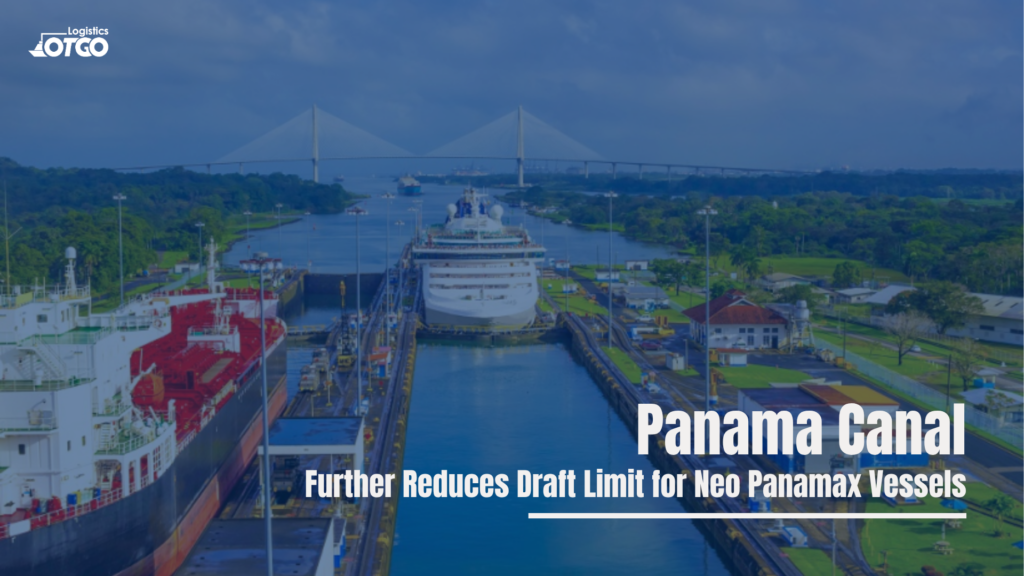
The Panama Canal will continue reducing the draft limit for Neo Panamax vessels starting late August, in response to El Niño and declining water levels at Gatun Lake. The continued tightening of draft restrictions underscores that water scarcity at Gatun Lake remains a major challenge for canal operations. The move could reduce cargo-carrying capacity for some vessels, affecting shipping costs and supply chain planning across international trade routes.
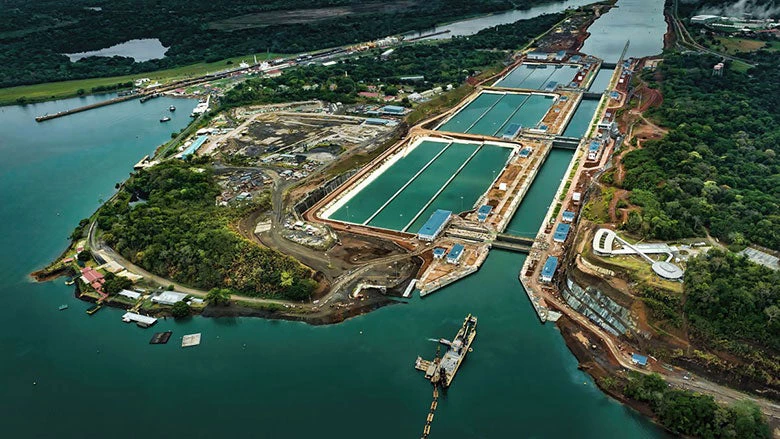
The U.S. National Oceanic and Atmospheric Administration (NOAA) and the World Meteorological Organization (WMO) have warned that the current El Niño event could reach record intensity. In response to the intensifying phenomenon, the Panama Canal Authority (ACP) announced it will further reduce the maximum draft limit for vessels transiting the Neo Panamax lock system.
The new adjustment will take place in two phases. Starting August 26, 2026, the maximum draft limit will drop to 48 feet (14.63 m). From September 3, 2026, the limit will be reduced further to 47.5 feet (14.48 m). These restrictions apply to the Neo Panamax lock system, which was built to accommodate larger vessels such as container ships, laden LNG carriers, and tankers.
According to NOAA, the current El Niño began forming in June. The agency forecasts a 63% probability that sea surface temperatures in the Niño-monitoring region of the Pacific will exceed 2°C, a threshold associated with a very strong El Niño event.
In its August 6 update, NOAA maintained this forecast, noting that a strong El Niño could suppress North Atlantic hurricane season activity, with a 75% probability of a below-average season.
However, the same phenomenon is also expected to significantly reduce rainfall across several regions, including the Caribbean and Latin America.
ACP said the decision was based on current water levels and forecasted trends over the coming weeks at Gatun Lake, the canal’s primary water source. According to the authority, this is part of a broader water and operations management strategy shaped by lessons learned from the 2023–2024 drought.
During the 2023 drought, Gatun Lake’s water level fell to just over 79 feet between June and October, forcing ACP to restrict both the number of daily transits and the maximum draft allowed. Currently, the lake’s water level stands at just over 84 feet – down nearly 1 foot from July – and is expected to fall further to around 83 feet by September.
ACP noted this marks the fourth and fifth draft adjustments of 2026, following reductions to 49 feet and 48.5 feet in July. During the 2023–2024 drought, the draft limit at the Neo Panamax locks was cut to as low as 43.5 feet at its lowest point.
For now, ACP has not adjusted the daily number of transits. However, since late July, the authority has suspended auctions for short-notice transit slots. Previously, in 2023, daily transits were reduced from a normal maximum of 38 to as few as 22.
According to The Maritime Executive, traffic through the Panama Canal has been increasing as U.S. energy exports to Asia rise following disruptions at the Strait of Hormuz, while U.S. import demand remains strong.
Data from the Panama Canal’s online dashboard shows 70 booked vessels and 35 unbooked vessels currently awaiting transit. Average wait times now exceed 6 days in both directions. For Neo Panamax vessels specifically, wait times range from 2 to 11 days.
There are currently 15 booked Neo Panamax vessels and 11 unbooked ones awaiting transit.
