
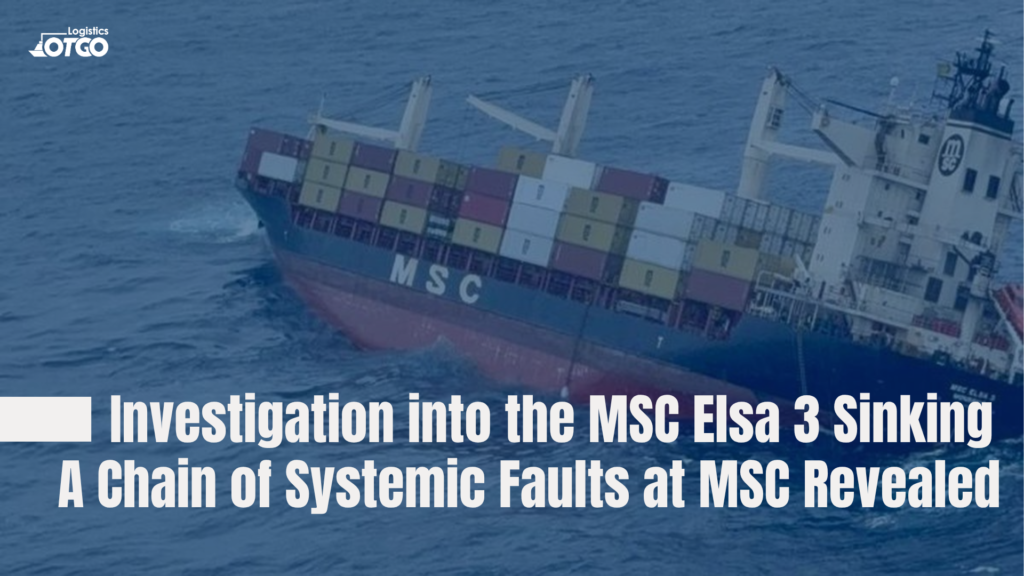
A preliminary report from the Directorate General of the Indian Maritime Administration (DGS) points to a series of technical failures, poor structural maintenance, and gaps in crew training that led to the MSC Elsa 3 disaster.
KERALA, INDIA – One year after the maritime disaster off the coast of Kerala, the Directorate General of the Indian Maritime Administration (DGS) has officially submitted its preliminary report to the Supreme Court. The investigation confirms that the sinking of the MSC Elsa 3 on May 24, 2025, was not an isolated incident. It was the inevitable consequence of a series of failures ranging from technical management and structural flaws in the hull to the crew’s inadequate emergency response capabilities.
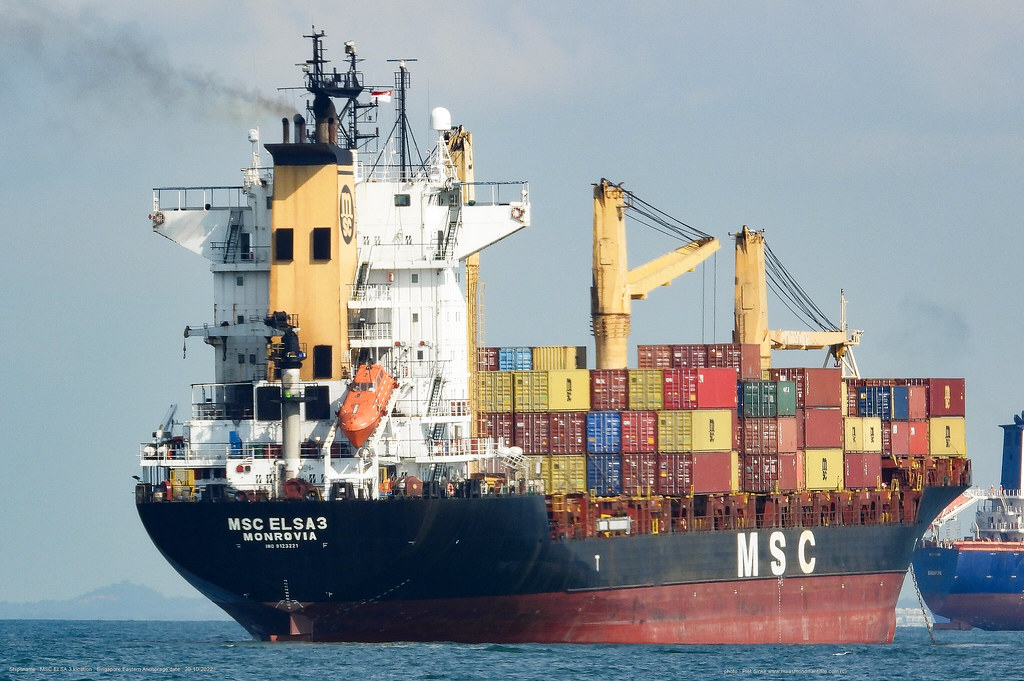
Container Ship MSC Elsa 3 Capses and Sinks Off the Coast of India:
On May 24, 2025, the container ship MSC ELSA 3, flying the Liberian flag and operated by Mediterranean Shipping (MSC), listed severely 26 degrees to port while en route from Vizhinjam port to Kochi, India.
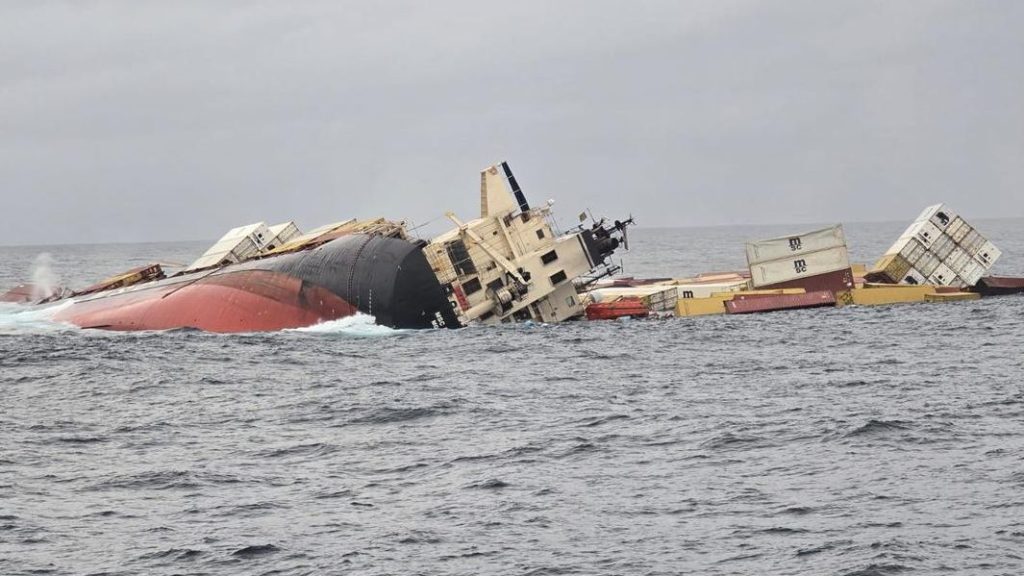
The initial cause was determined to be water ingress into one of the cargo holds, causing a loss of balance. Despite calm sea conditions at the time, the ship was unable to regain its balance. After sending out a distress signal, the Indian Coast Guard quickly deployed rescue operations, saving 21 of the 24 crew members. Three senior officers, including the captain, chief engineer, and deputy engineer, remained on board to assist in the rescue. However, in the early morning of May 25, the ship capsized completely and sank, forcing the three officers to be rescued by the Indian Navy vessel INS Sujata. All 24 crew members were rescued by the Indian Navy and Coast Guard.
At the time of the incident, MSC ELSA 3 was carrying 640 containers, including 13 containers of hazardous materials, among which were 12 containers of calcium carbide – a highly reactive substance in water. In addition, the ship was carrying 84.44 tons of diesel fuel and 367.1 tons of furnace oil, raising concerns about the risk of oil spills and marine pollution.
The Kerala state authorities warned residents to avoid contact with debris or containers washed ashore.
Operational warnings were ignored and ballast water system malfunctions occurred:
According to reports from DGS, signs of danger had been present before the disaster. During container handling at Vizhinjam International Port, port authorities detected and warned the ship’s management about a 5-degree tilt. Notably, this starboard tilt had also been observed on previous voyages of the MSC Elsa 3 but was not properly addressed.
During the final voyage, the ballast water system – a core system for maintaining the ship’s balance and stability – experienced a serious malfunction. Seawater infiltrated the ballast tanks uncontrollably, causing the Neo-Panamax’s tilt to surge to 26 degrees. This excessive tilt caused the stacks of containers to collapse, shift position, and completely destabilize the ship. Around midnight on May 24th, numerous containers began falling into the sea, and the ship officially sank completely the following day.
Gaps in the Safety Management System and Crew Training:
Besides the technical incident, the DGS raised serious questions about the ship’s safety management system and training procedures. The report revealed that the ship’s Chief Officer had only taken office a week before the accident and had not had time to familiarize himself with the ship’s specific operating systems.
Many other crew members were also assessed as lacking practical experience in dealing with ballast water system emergencies. Most of them had only received theoretical training, leading to confusion and incorrect handling procedures when seawater flooded the ballast tanks uncontrollably.
Suspicions of “cracks” in the old structure from 2016:
Another crucial detail clarified by the Indian maritime investigation agency was the serious deterioration of the ship’s hull. The container ship MSC Elsa 3 (built in 1997, 22,994 DWT, 1,728 TEU capacity) suffered significant structural damage after a collision in 2016. However, instead of a proper overhaul, this Liberian-flagged vessel was only maintained with temporary repairs. Structural defects identified during previous routine inspections were repeatedly delayed in being repaired or had their parts fully replaced.
Legal disputes and a wave of compensation claims against MSC
The sinking of the ship 15 nautical miles off the coast of India not only caused property damage but also left serious environmental consequences due to oil spills from the wreck and drifting containers. Currently, the Indian government, the Kerala state government, and the local fishing community are actively pursuing large-scale financial compensation lawsuits against MSC. To ensure the enforcement of the judgment, the Indian court even resorted to seizing several other MSC vessels as collateral.
Regarding personnel, the case is still ongoing with the detention of key crew members. The Kerala High Court recently granted release to three crew members (including the electrical engineering officer ETO and two fishermen).
