
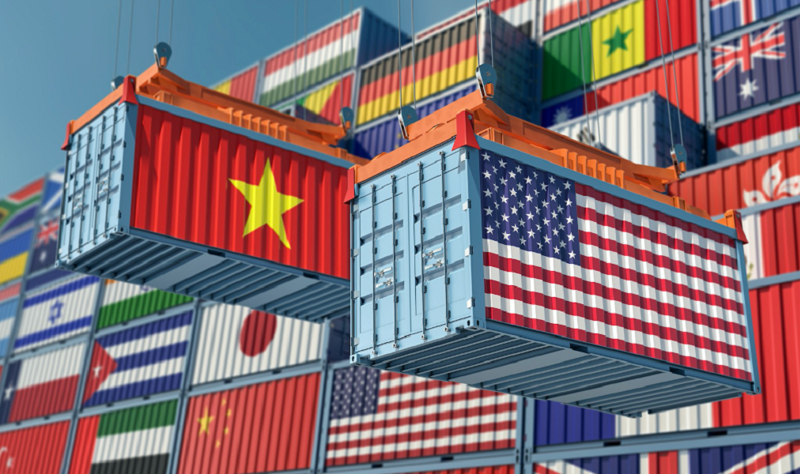
Faced with a wave of trade protectionism and new tariff policies from the US, Vietnamese export businesses are facing a major test. To maintain their position in this billion-dollar market, increasing domestic content and digitizing administrative procedures are considered crucial solutions for survival.
The US’s temporary 10% import tariff for 150 days is not only a short-term trade balance adjustment tool but also a warning signal of a period of tighter controls. After July, when official bilateral trade investigations begin, Vietnamese goods will come under closer scrutiny.
The biggest concern for experts is not the 10% figure, but the risk of being included in the list of goods under investigation for tax evasion and illegal transshipment. Given Vietnam’s high trade surplus with the US, origin verification procedures will certainly be tightened to prevent goods from using “transit” routes to evade tariffs.
In reality, businesses are seeing how supply chain inadequacies are eroding competitiveness. Mr. Nguyen Dinh Dao, representative of Lien Son Construction and Trading Company, shared that while domestic businesses have to import raw materials from the US at high costs, competitors have access to cheaper goods from other markets.
Furthermore, the phenomenon of surplus goods from neighboring countries flooding into Vietnam to be rebranded as exports to the US is creating an unhealthy competitive environment, directly threatening the reputation of Vietnamese brands internationally.
To support businesses, authorities have begun taking more decisive actions. The Customs sector has deployed personnel on duty 24/7 at key border crossings and tightened supply chain management to ensure the legality of goods exported to the US. The Tax sector is accelerating the transition from lump-sum tax to declaration-based tax to increase data transparency.
In Ho Chi Minh City, solutions such as extending tax payment deadlines, reducing VAT, and accelerating tax refunds are being implemented to alleviate cash flow pressure for businesses.
However, despite numerous support policies, “bottlenecks” in specialized procedures continue to cause headaches for businesses. The situation of goods waiting at ports due to delays in chemical licensing, or the cumbersome and time-consuming process of issuing Certificates of Origin (C/O), has significantly increased opportunity costs and the risk of contract violations. Many businesses have suggested the need to establish a national data linkage system between the Tax, Customs, Ministry of Industry and Trade, and C/O issuing agencies.
Comprehensive digital transformation and inter-sectoral data connectivity not only help eliminate “invisible” administrative barriers but also provide solid evidence of the transparency of Vietnamese goods. This is the only way for businesses to reduce cost burdens and confidently respond to stringent trade investigations from the US in the future.
