
Recent reports indicate that China has begun detaining Panama-flagged ships at its domestic ports. This development follows the Panamanian government’s seizure of terminals managed by Hong Kong-based CK Hutchison near the Panama Canal earlier this year. The U.S. Federal Maritime Commission (FMC) stated it is closely monitoring China’s potential retaliatory actions and their broader impact on the global shipping industry.
In a conversation between FreightWaves and FMC Chair Laura DiBella, it was revealed that China is detaining Panama-flagged vessels at its domestic ports under the guise of port state control. The frequency of these detentions has reportedly far exceeded historical norms. According to DiBella, these intensified inspections are being carried out under informal directives and appear intended to punish Panama following the transfer of Hutchison’s port assets.

Laura DiBella – who was confirmed to the shipping regulator in December and appointed Chair by President Donald Trump in January – stated that the FMC is “closely monitoring” the situation and its implications for global shipping conditions.
In January, following an investigation, Panama’s Supreme Court ruled that the concession granting CK Hutchison the right to operate the Balboa and Cristobal terminals was unconstitutional. Subsequently, Panama officially awarded 18-month interim operating agreements to Maersk’s APM Terminals and Mediterranean Shipping Company’s (MSC) subsidiary, Terminal Investment Limited.
The Panamanian court ruling comes a year after President Trump declared that the United States would reclaim control of the Canal from China. On the other hand, Hutchison has filed for international arbitration against Panama, seeking damages exceeding $2 billion.
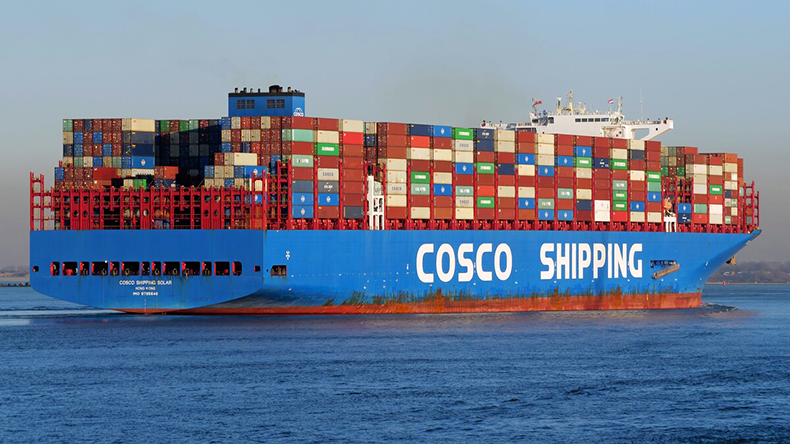
DiBella added that the Chinese Ministry of Transport held high-level discussions with Maersk and MSC following the court ruling. Shortly thereafter, state-owned COSCO – the world’s fourth-largest container carrier – suspended its services to the port of Balboa and rerouted its operations.
Panama-flagged ships represent a significant portion of global trade, with more than 4,700 bulk and container vessels accounting for 15% of total global tonnage. Consequently, these retaliatory actions could lead to serious commercial and strategic consequences for the U.S. shipping industry.
Chair DiBella affirmed that actions by foreign governments to detain or delay vessels involved in U.S. commerce are inconsistent with the Commission’s mandate to protect the reliability and integrity of America’s global supply chain. At this time, the specific measures the U.S. might take to counter China’s retaliation have not been disclosed.
