
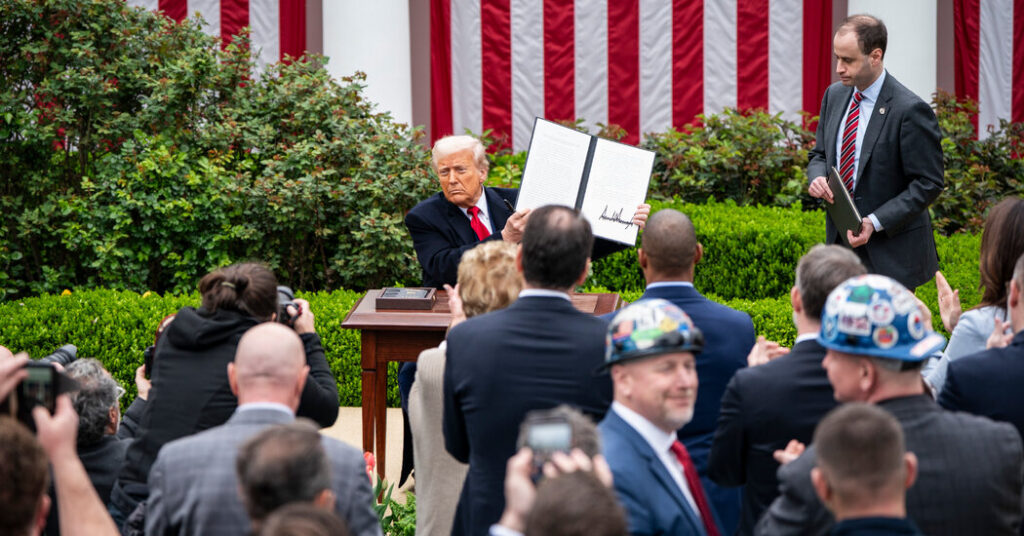
On February 20, 2026, the Supreme Court issued a definitive ruling that the International Emergency Economic Powers Act (IEEPA) does not authorize the President to impose tariffs. As a result, the Trump administration’s tariffs implemented under IEEPA — including those related to fentanyl and reciprocal trade measures — have been invalidated. However, tariffs imposed pursuant to Sections 301 and 232 remain unaffected.

Following the Court’s decision, the President issued an executive order formally terminating the IEEPA-based tariffs. U.S. Customs and Border Protection (CBP) has confirmed that IEEPA duties will no longer be collected on merchandise entered for consumption, or withdrawn from warehouse for consumption, beginning February 24, 2026. Importers seeking reimbursement of previously paid IEEPA duties will likely need to pursue judicial remedies before the United States Court of International Trade.
Although the IEEPA tariff framework has been discontinued, the administration has indicated its intention to preserve similar trade restrictions through alternative statutory authorities. To that end, a 15 percent tariff has been imposed under Section 122 of the Trade Act of 1974 for a temporary period of 150 days commencing February 24, 2026. Certain product categories remain exempt, including those previously excluded under the IEEPA and Section 232 regimes. Additionally, the administration is expected to expand its utilization of Sections 301 and 232 authorities.
In response to the Supreme Court’s ruling, President Trump directed through executive order that all tariffs imposed under IEEPA “shall no longer be in effect and, as soon as practicable, shall no longer be collected.” CBP subsequently issued guidance confirming that IEEPA duties ceased to apply to goods entered for consumption, or withdrawn from warehouse for consumption, on or after 12:00 a.m. EST on February 24, 2026.
The Supreme Court did not address the procedural mechanism for refunding previously collected IEEPA duties. By affirming the Federal Circuit’s decision, the matter now returns to the Court of International Trade to determine the appropriate remedy. Public statements by the President suggest that refunds will be resolved through litigation rather than a voluntary administrative process. Accordingly, importers seeking reimbursement will likely be required to pursue judicial relief before the Court of International Trade.
Shortly after the Supreme Court’s decision, the President issued a proclamation imposing a 10 percent tariff under Section 122 of the Trade Act of 1974, which was increased to 15 percent the following day. The tariff applies broadly to merchandise imported into the United States and became effective on February 24, 2026. Absent congressional action, the measure will remain in force for 150 days, expiring on July 24, 2026.
The proclamation exempts thirteen categories of products, largely reflecting exemptions previously granted under IEEPA and Section 232. These include certain critical minerals; currency and bullion metals; energy and related products; natural resources and fertilizers unavailable domestically; specified agricultural products such as beef, tomatoes, and oranges; pharmaceuticals and their ingredients; selected electronics; various motor vehicles and related parts; certain aerospace products; informational materials and donations; goods already subject to Section 232; United States–Mexico–Canada Agreement (USMCA)-compliant articles; and certain textile and apparel products qualifying for duty-free treatment under CAFTA-DR.
Notably, Section 122 tariffs do not stack on top of existing Section 232 duties, operating in a manner similar to the former IEEPA structure. For derivative products of steel, aluminum, and copper, Section 122 duties apply to the non-metal content. However, unlike certain prior frameworks, no exemption exists for U.S.-origin content under Section 122.
Tariffs imposed under Sections 301, 232, and 201, as well as duties administered under the antidumping and countervailing duty statutes, remain unaffected by the Supreme Court’s ruling. The administration is anticipated to rely increasingly on these congressionally delegated authorities to sustain and expand trade measures.

The Office of the United States Trade Representative (USTR) has announced multiple new Section 301 investigations targeting a range of trading partners and issues, including pharmaceutical pricing practices, industrial overcapacity, forced labor, digital services taxes, seafood and rice trade practices, marine pollution, and alleged discrimination against U.S. technology companies. These investigations are expected to proceed on an accelerated timeline.
Similarly, the Bureau of Industry and Security (BIS) is actively conducting several Section 232 investigations that may result in expanded industry-specific tariffs. Beyond steel, aluminum, and automobiles, current investigations encompass robotics and industrial machinery; personal protective equipment and medical supplies; wind turbines; unmanned aircraft systems; polysilicon; commercial aircraft and jet engines; processed critical minerals; medium- and heavy-duty trucks and related parts; pharmaceuticals and active ingredients; semiconductors and chip-manufacturing equipment; timber and lumber; and copper. Upon completion of these investigations, the President may impose additional tariffs on covered goods and derivative products.
The U.S. Department of Commerce continues to administer AD/CVD investigations concerning unfair pricing and foreign government subsidies. Although such investigations are typically initiated by domestic industries alleging injury, heightened enforcement and more aggressive application of these statutes are anticipated, potentially resulting in increased duty rates on affected merchandise.
CBP enforcement activity is expected to intensify to ensure the full collection of applicable tariffs. Importers may see increased issuance of CBP Forms 28 and 29 to verify accurate classification, valuation, and reporting of imported merchandise. This enforcement posture aligns with the Department of Justice’s White Collar Enforcement Plan, which identifies trade and customs fraud as a priority area to ensure equitable competition for American businesses in global markets.
Further developments regarding enforcement practices are anticipated as the administration continues to recalibrate its trade policy framework.
